

3608: liner notes for a New Year's Eve in Boston
Liner notes for the 203-track playlist we built for a single New Year's Eve party at the Westin in Boston, room 3608. Why Outkast slots between Britney and the Chili Peppers, what the room actually sounded like at 1:30 a.m., and the philosophy behind sequencing 12 hours of music with no shuffle button.
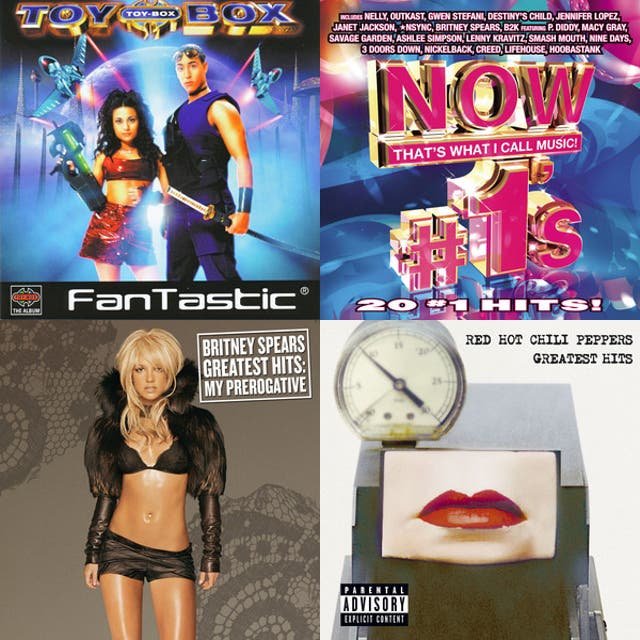
Cover via Spotify
Room 3608 was on the thirty-sixth floor of the Westin in Boston, with a window that faced the Common and a door that nine of us had a copy of by ten o’clock. We’d rented it for New Year’s Eve. There was no DJ booked, no speaker rental, no plan beyond a borrowed pair of bookshelf speakers, a laptop on the desk, and a playlist we’d spent the previous two weeks building specifically — and only — for that night.
The playlist was 203 tracks long. It was sequenced to run from doors-open at nine through the last cab leaving at sunrise: 12 hours of music with no breaks and no requests. The number “3608” on the room key became the name of the file, and then the name of the playlist, and then — eventually — the name of the thing you’re reading about. We pressed play around 9:15. The file got opened again exactly once after that night, fifteen years later, on a laptop that had outlived three of its owners. The order was untouched. I just hit play.
A note up front: most of the playlists on snoopspecial are built to be shuffled. The bigger ones especially — the long ones — you can drop in anywhere, pull tracks at random, and they hold. 3608 isn’t one of those. It was sequenced for a specific room on a specific night, and the order is doing real work. You can shuffle it and it still sounds like the room. You’ll just be hearing a different room.
This is the playlist. These are the liner notes.
The starting block
The first track is Toy-Box’s “Best Friend.” Bear with me. It’s a Danish bubblegum-pop song from 1999 that sold a million copies, gets played on no radio station in America, and is — if you let it — the perfect way to start a 12-hour rotation. Why? Because nobody arrives at a party in the mood for the first track. The first track has to do three things: signal that a party has started, ask nothing of you emotionally, and dare you to admit you know it. “Best Friend” does all three by minute two. Then “Me Against the Music” kicks in, and you have permission to enjoy yourself.
I’d argue every long mix needs that throwaway opener. The album it lives on doesn’t matter. What matters is the listener walking past the speakers, hearing it, and not turning the music off.
The first big move
Tracks 3 through 5 are the real beginning: “Hey Ya!” → “Give It Away” → “Kernkraft 400.” Outkast into Red Hot Chili Peppers into Zombie Nation. The transition from “Hey Ya!“‘s clean stop to the opening bass-and-percussion of “Give It Away” is the kind of move that defined how we listened in that era — three songs from three genres that nobody in 1985 would have argued shared a room. By the mid-2000s we didn’t even think about it. The MP3 collapsed the genres into a single category called “songs we like.”
Whoever’s reading this who DJ’d weddings in the 2000s knows what comes next: the bass drop on “Kernkraft 400,” the room doing the “oh-oh-oh” chant, and then you’re locked in. That was the moment the hotel room stopped being a hotel room.
Where the rotation finds its voice
Track 7 is where the playlist tips its hand: Billy Joel’s “We Didn’t Start the Fire,” followed by Sean Paul, followed by another Red Hot Chili Peppers. The mix has a thesis now — it’s a cross-generational party, the kind where someone’s older brother flew in from Chicago and someone else’s roommate’s little sister came up from BU, and both of them know all the words to all the songs because in the early 2000s, before streaming completed the long fragmentation, that was still possible.
Tracks 10–14 are deliberately uncool. Starship, Toto, Steve Winwood, Soul Asylum, Kenny Loggins. There’s no irony here. These are songs that earn their slot because they are objectively, mechanically good — the bridge on “Africa” is the bridge on “Africa,” it doesn’t matter what year you were born — and a long mix at a party has to give up on irony eventually. Around track 12 the room stops watching itself dance.
The hip-hop spine
50 Cent shows up twice in a row at tracks 16 and 17 — “In Da Club” then “P.I.M.P.” — and the playlist commits to the rap section that builds the back half of the night. Bell Biv DeVoe’s “Do Me!”, Run–DMC and Aerosmith’s “Walk This Way,” Angie Martinez’s “If I Could Go.” These transitions worked because the BPMs were close and the vocals were so distinctive that the listener never lost track of which song they were in. We didn’t have crossfade software. We had two windows of Winamp open and a finger on the spacebar, and we’d burned through both of the dry-run sessions in someone’s apartment the weekend before to lock down which moves landed.
A rule from that era: never follow a rap song with another rap song from the same year unless they share a producer. “In Da Club” and “P.I.M.P.” both came off Get Rich or Die Tryin’. The continuity is on purpose. It’s not lazy programming.
The pop-punk seam
About a third of the way through the playlist there’s a stretch — I won’t list every track — where 2000s pop-punk crossfades into Bay Area rap and somehow nobody in the room notices the genre change. This was the sound we were trying to bottle: a Used song into an E-40 song into a Sum 41 song into a Mac Dre song. There is no algorithm that recommends that sequence. You had to know who was going to be at the party. You had to know which songs the people in the room would yell back at the speakers, and you had to know that the same room would yell back at very different songs. That was the curatorial work, and we did most of it sitting on the floor of someone’s living room with a printed track-out the week before New Year’s.
I’ve left the sequence intact. If you played this in 2024 to a room of people who weren’t there, they’d think the genres are randomly shuffled. They aren’t. They’re sequenced by emotional adjacency, which is a different thing than musical adjacency. “I Wanna Be Sedated” and “Ridin’ Dirty” both live in the same part of the brain at 1:30 a.m.
Midnight
The countdown sits between tracks 84 and 85. We didn’t put a song at midnight on purpose — we wanted the room itself to be the audio for those 30 seconds. The track immediately after the kiss is U2’s “Beautiful Day,” which is the only obvious choice we made all night, and which earned it. Nobody groans at “Beautiful Day” at 12:01 a.m. on January 1st. That’s its whole job.
Why this isn’t on Spotify the normal way
Spotify has the playlist. You can listen to it right now. But Spotify doesn’t have the story — there’s no field for “this was built for a specific party in a specific hotel room and never played anywhere else” or “track 47 is on this list because of a 20-minute argument on the floor of the room about whether it belonged.” That’s what this page is for. Spotify is the audio. snoopspecial is the audio plus everything around it.
This is also one of the playlists where the order really matters. Plenty of the lists on this site — especially the long ones — are built so you can hit shuffle and let them run, and they still feel like the thing they’re supposed to be. 3608 is the other kind. The point of “Hey Ya!” → “Give It Away” → “Kernkraft 400” is that those three songs land in that order. Shuffle it and it still works as a snapshot of the era. Play it in order and you get the actual night.
How to listen to a 12-hour playlist
A few things we learned from putting this back together:
-
Start in the middle if you have to. Track 1 is the right opening for a party, not for a Tuesday afternoon. If you’re listening alone at your desk, skip to track 30 and let it play forward. The middle of the rotation was always where the best work was.
-
Don’t dip in and out. This playlist was sequenced as one continuous evening. The 90-second instrumental at track 87 isn’t a skip — it’s a breath between two heavier songs, and removing it changes the pacing of everything around it.
-
Trust the bad-on-paper transitions. Some of the moves in this playlist are deliberately wrong. They worked anyway because the energy of room 3608 was right. If a transition surprises you, give it 30 seconds before you reach for the skip button.
-
The end is the end. The last six tracks are designed as a comedown. They start with The Roots’ “The Seed (2.0)” and finish on a Soul Decision track called “Faded” which is, by 2024 ears, embarrassing. It’s the right closer. It’s the song that played as the last four people put their coats on and the housekeeping cart rolled past the door. We left it there.
What got cut
Three things that aren’t on the resurrected playlist but probably should be: a live Linkin Park version of “Crawling” we’d cued up and dropped at the last minute for tempo reasons, a Bay Area rap mixtape called The Bay Bridge Sessions that one of us had brought up from California on CD-R and that we passed around the room after 3 a.m., and a 90-second snippet of someone’s voicemail that we’d somehow recorded into a track and used as a transition exactly once. The voicemail is gone. The mixtape is on YouTube somewhere. “Crawling” we replaced with another Linkin Park track that holds up better.
The file from that night doesn’t have everything. But it has more than I thought it had, and after fifteen years of curating against the algorithm, this is the closest thing to a personal archive we’ve built. It was made for one party, in one room, on one night. Press play. If you have the time, play it in order. Either way, stay for the whole thing.